For South Carolina closings
CL-100 Findings? We're the Correction Step.
- Licensed & Insured
- Every Job Photo-Documented
- Honest Recommendations Only
- Serving the Lowcountry
Findings decoder
What your report is telling you
A CL-100 is not pass or fail. It is a set of yes/no findings. Here is what the ones we handle mean.
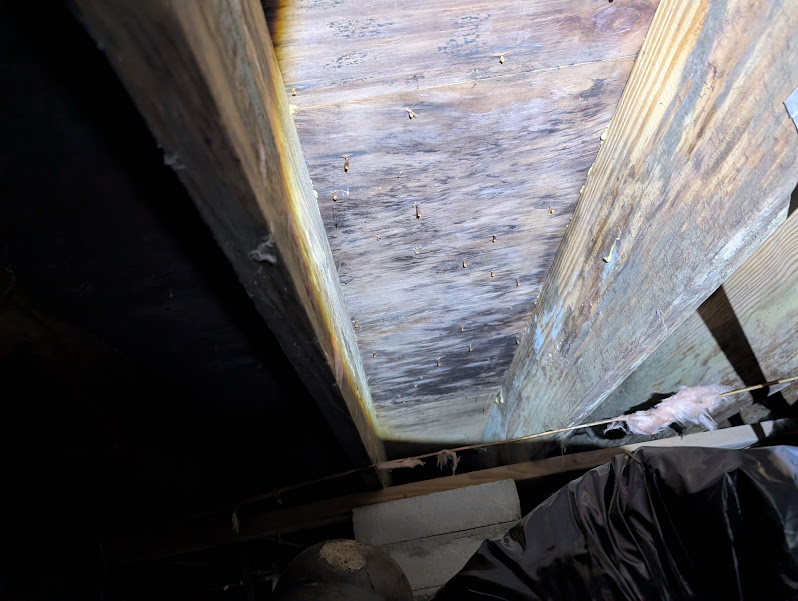
Excessive moisture conditions
Wood moisture readings at or above 20 percent, or standing water in the crawlspace.
Correction: identify the source, install or replace the vapor barrier, correct drainage, and add dehumidification where it is needed.
Wood-destroying fungi, inactive
Fungi is present but wood moisture is below 28 percent. It stays inactive only if the moisture stays down.
Correction: eliminate the moisture source so the finding does not return on re-inspection.
Wood-destroying fungi, active
Wood moisture has reached 28 percent or more and decay fungi is growing.
Correction: we correct the moisture conditions driving it. Any chemical treatment of the wood itself is pesticide application and is performed by a licensed pest control operator.
Visible damage to wood members
The form itself recommends that corrections be evaluated and performed by a licensed contractor.
Correction: we coordinate directly with a licensed contractor, share our moisture findings and photos with them, and sequence our work around theirs so the closing timeline stays intact.
Active termite or insect findings and re-inspections belong to your licensed pest control company. We stay in our lane and make their re-inspection easy.
20%
The wood moisture level where the report flags excessive moisture.
28%
The level where wood-decay fungi becomes active.
Our correction target is simple. Get the wood below 20 percent and keep it there.
The standard fix
The correction South Carolina's standard prescribes
South Carolina's regulation on wood-destroying organisms describes how excessive crawlspace moisture is normally corrected: a polyethylene vapor barrier installed over the crawlspace soil, added foundation ventilation where needed, and drainage or a sump system where water keeps entering. That is our core work. We are not improvising a fix. We are performing the correction the standard describes, and documenting it.
Process
How the closing loop works
- 01
Send us the report and your closing date
We read the findings before we come out, so the visit is focused on what the report actually lists.
- 02
We quote the correction scope from the actual findings
Line for line, nothing padded on. If an item does not need work, we say so instead of billing for it.
- 03
We complete the corrections and document them
Before-and-after moisture readings plus labeled photos of every area we touched, delivered in a form you can drop into the closing file.
- 04
Your inspection company re-inspects and issues the updated report
They arrive with our documentation in hand, which keeps the follow-up visit short.
We do not issue CL-100s or re-inspections. That is your licensed inspection company. Our documentation is what makes their job quick.
Repair quote
Get a correction quote
Five fields is all we need to start. We will call you back with next steps and a time we can be on site.
Have the report handy. Mention it and we will request a copy by email so the quote matches the findings line for line.
Prefer to talk it through? Call (843) 408-3877
Questions
Frequently asked questions
Closing soon with findings on the report? Call (843) 408-3877.
Send us the CL-100 report and the closing date. We will quote the correction scope and tell you honestly whether we can hit your timeline.
(843) 408-3877