Service
Crawl Space Dehumidifier Solutions in Charleston, SC
- Licensed & Insured
- Every Job Photo-Documented
- Honest Recommendations Only
- Serving the Lowcountry
What a dehumidifier install includes
Moisture and humidity assessment
We log relative humidity and wood moisture content at several points so the plan is based on your actual numbers.
Correct sizing
Capacity is matched to square footage, ceiling height, and how sealed the space is. Undersized units run constantly and never catch up.
Placement and mounting
The unit is placed for even air distribution and hung or set clear of the ground so it stays out of any water.
Condensate drainage
Water is routed to gravity drainage where the grade allows, or to a pump where it does not. No buckets to empty.
Controls and set point
We set a target humidity, show you the control, and explain what a normal reading looks like through a Charleston summer.
Verification and photos
Readings are rechecked after the space stabilizes, and you get labeled photos of the unit, drainage, and final numbers.
Why Charleston crawlspaces stay humid even with a vapor barrier
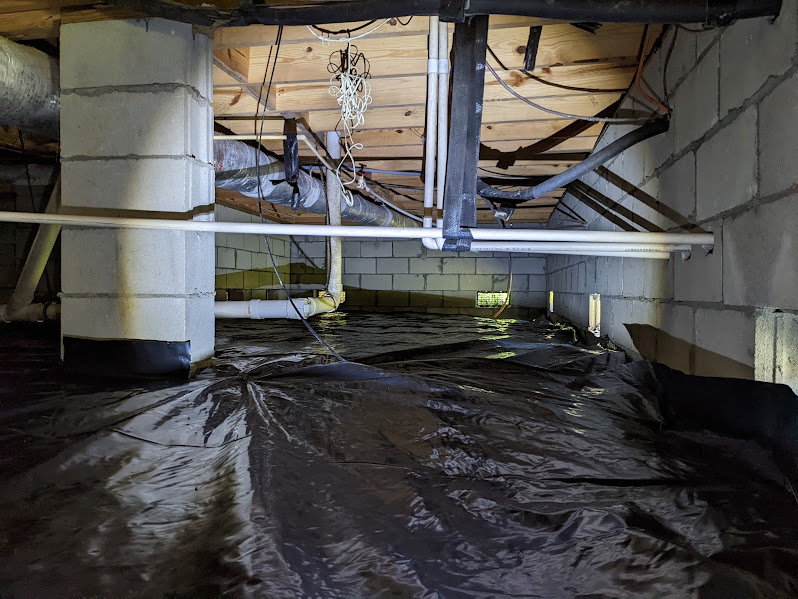
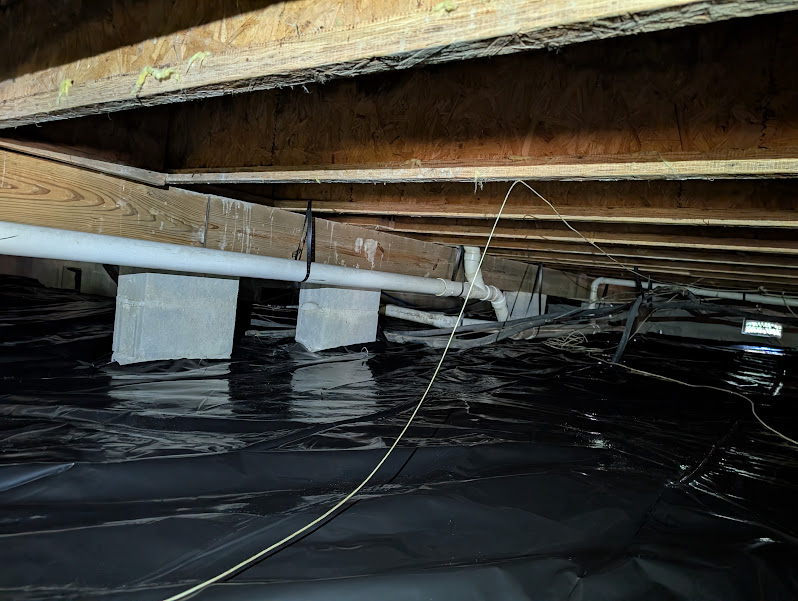
A vapor barrier stops moisture coming up out of the soil, and that is the biggest single source in most crawlspaces. It does not remove moisture already in the air. In the Lowcountry, summer dew points sit in the low to mid 70s for weeks at a time, so the air entering through vents is already loaded before it reaches your framing.
That air then hits a cool crawlspace. When warm, wet air meets a surface below its dew point, water forms on joists, ductwork, and pipes. This is why homeowners see condensation and smell musty air in a crawlspace that has a clean, correctly installed barrier on the ground. The ground is handled. The air is not.
Keeping relative humidity under about 60 percent is the practical target, because wood-destroying fungi need sustained moisture in the wood to grow. A properly sized dehumidifier holds that line through August, which is exactly when a vented Charleston crawlspace is least able to dry itself out.
How the install runs
- 01
Inspect and measure
We take humidity and wood moisture readings, check the ground cover, and look for leaks or standing water first.
- 02
Fix the source first
Plumbing leaks, drainage problems, and missing ground cover get addressed before equipment. A dehumidifier is not a leak repair.
- 03
Size and quote
We match capacity to the space and give you one flat written price covering the unit, drainage, and power.
- 04
Install and drain
The unit is mounted, the condensate line is routed to gravity drainage or a pump, and the set point is dialed in.
- 05
Verify and hand off
Once the space stabilizes we recheck the readings, review the photos with you, and show you how to monitor it.
What it costs
Pricing depends on the capacity your crawlspace needs, the drainage route, and whether power has to be run. We quote the unit and the installation together in writing. If your readings do not support adding equipment, we will tell you and leave it alone.
Sizing, drainage, and when a dehumidifier is not the answer
Capacity is rated in pints of water removed per day. Sizing follows square footage, ceiling height, and how tightly the space is sealed. A sealed, encapsulated crawlspace needs less capacity than a partially sealed one of the same size, because it is not fighting a constant supply of outside air. Guessing high wastes money and short cycles the unit. Guessing low means it runs nonstop and never reaches the set point.
Condensate has to go somewhere reliable. Where grade allows, we run a gravity line to daylight or an approved drain. Where it does not, a condensate pump moves the water out. What we will not do is set a unit over a bucket or drop the line onto the vapor barrier, which just returns the water to the crawlspace.
A dehumidifier is the right call when air moisture is the remaining problem: humidity holding above 60 percent, condensation on ducts and pipes, or a sealed crawlspace that needs its air managed year-round. It is the wrong call when there is an active plumbing leak, poor exterior drainage dumping water under the house, standing water, or no ground cover at all. Fix the source first. Running equipment against a leak is a monthly power bill with no result.
Frequently Asked Questions
Related work
Crawlspace Encapsulation
Seal the space so humidity control can actually hold a set point.
Vapor Barrier Installation
Cut off ground moisture first, which is the larger source.
Not sure which of these your home needs? Compare every option on our Charleston crawlspace services page, or read how we handle CL-100 moisture corrections before a closing.
Get real humidity numbers before you buy equipment.
Free crawlspace inspection across Charleston and the Lowcountry, with readings and labeled photos you keep.