Service
Crawl Space Vapor Barrier Installation in Charleston, SC
- Licensed & Insured
- Every Job Photo-Documented
- Honest Recommendations Only
- Serving the Lowcountry
What a vapor barrier installation includes
Ground preparation
We clear debris, pull sharp scrap, and rake the soil level. Material laid over an unprepared floor tears and lifts within a season.
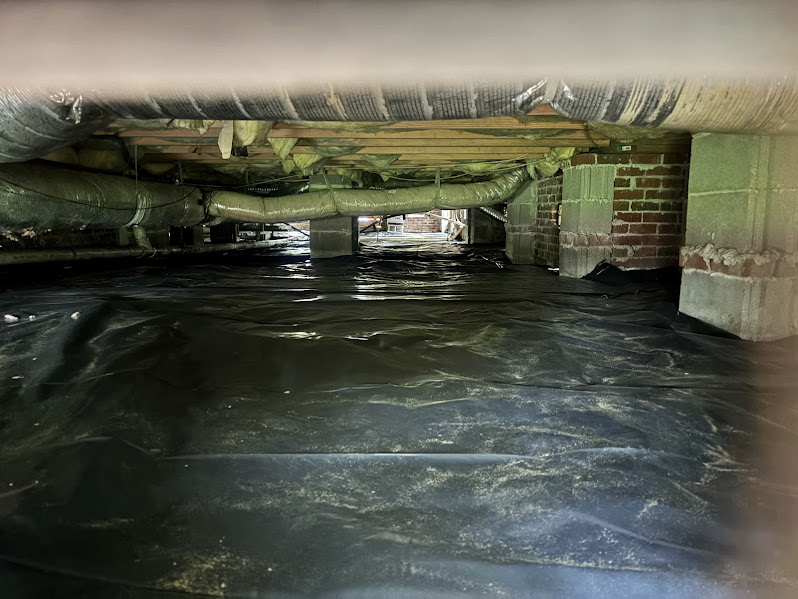
Seam-overlapped and sealed installation
Sheets are overlapped generously and sealed with seam tape so ground moisture has no open path. No loose plastic sitting in sections.
Mil thickness options explained
We walk you through 6 mil, 12 mil, and 20 mil, what each holds up to, and which one fits your crawlspace and how it gets used.
Pier wrapping
Barrier is run up and sealed against piers and the foundation wall where your plan calls for it, so the ground stays covered edge to edge.
Moisture readings before and after
We log wood moisture content and relative humidity at the start and at completion, and you get both numbers in writing.
Photo documentation
Labeled photos of prep, seams, piers, and the finished space. Useful for your records and for a real estate file if you need it.
Why Charleston crawlspaces need the ground sealed
The water table sits high across the Lowcountry. On James Island, Johns Island, and much of West Ashley, the soil under a crawlspace is damp most of the year, and bare soil releases that moisture straight into the air under your floor. Summer dew points here stay in the 70s for weeks, so open vents pull in humid air rather than drying anything out.
That moisture load has visible costs upstairs. Wood-destroying fungi need damp wood to grow, and joists and subfloor in a vented Charleston crawlspace give them exactly that. Hardwood floors cup, doors stick, and the air in the house smells musty because a large share of the air you breathe indoors came up from the crawlspace first.
It also shows up in real estate transactions. Moisture readings above threshold and a failed or missing ground cover get written onto inspection reports, and those findings stall closings until they are corrected. A properly sealed vapor barrier addresses the source rather than masking the symptom.
How the installation runs
- 01
Inspect and measure moisture
We crawl the full space, log wood moisture and humidity readings, and photograph the ground and framing.
- 02
Prep and clean
Debris and failed material come out, sharp objects are cleared, and the soil is raked level for a flat seal.
- 03
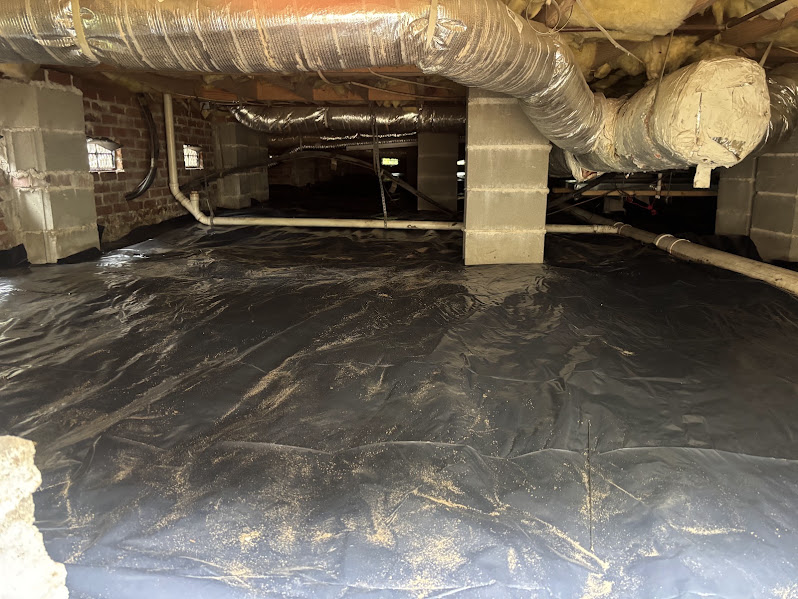
Install and seal the barrier
Sheets are cut, overlapped, taped, and run up the piers so the ground is covered without gaps.
- 04
Document with photos
We photograph seams, piers, transitions, and the finished floor, with labels for each area.
- 05
Review the results with you
You get before and after readings, the photo set, and a plain explanation of what changed and what to watch.
What it costs
Vapor barrier pricing is driven by square footage, mil thickness, and how much prep the space needs. We measure during the inspection and give you one flat number in writing. If a thinner material would serve your crawlspace just as well, we will tell you instead of quoting up.
6 mil, 12 mil, or 20 mil
Mil is the thickness of the material. 6 mil is a basic ground cover. It blocks moisture well on paper, but it punctures easily and does not hold up to anyone crawling on it, so it is best for spaces nobody enters.
12 mil is the common middle choice for Charleston homes. It resists tearing during normal service work, handles a plumber or HVAC tech crawling through, and holds a taped seam over time.
20 mil is a heavy reinforced liner used in encapsulations and in crawlspaces that get regular traffic or hold mechanical equipment. It costs more and it lasts longer under abuse. We recommend it when the space calls for it, not by default.
Frequently Asked Questions
Related work
Crawlspace Encapsulation
Full liner, sealed vents, and controlled humidity when the space needs it.
Crawlspace Cleanouts
Clear debris and fallen insulation so the barrier can seal properly.
Crawl Space Dehumidifiers
Manage humidity in a sealed crawlspace through a Charleston summer.
Not sure which of these your home needs? Compare every option on our Charleston crawlspace services page, or read how we handle CL-100 moisture corrections before a closing.
Get moisture readings before you spend anything.
Free crawlspace inspection across Charleston and the Lowcountry. We measure, photograph, and quote one flat price.