Service
Crawlspace Insulation Removal & Replacement in Charleston, SC
- Licensed & Insured
- Every Job Photo-Documented
- Honest Recommendations Only
- Serving the Lowcountry
What removal and replacement includes
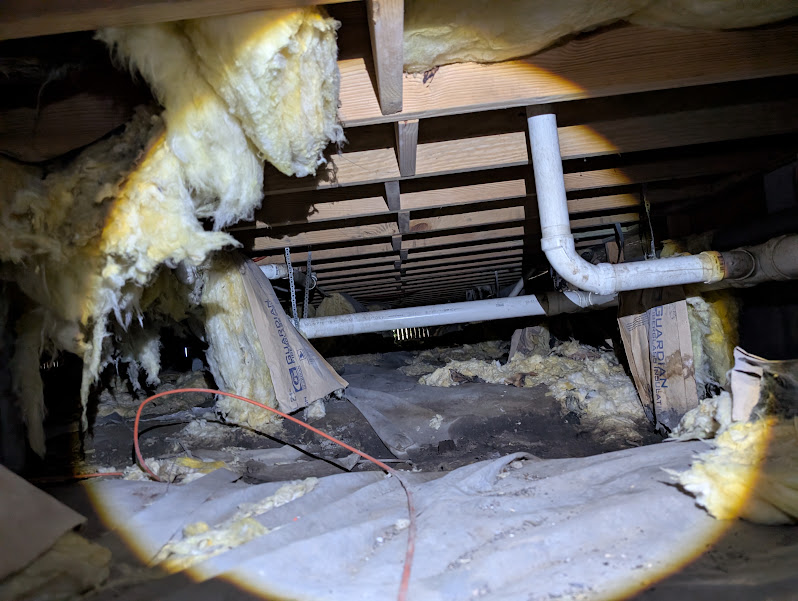
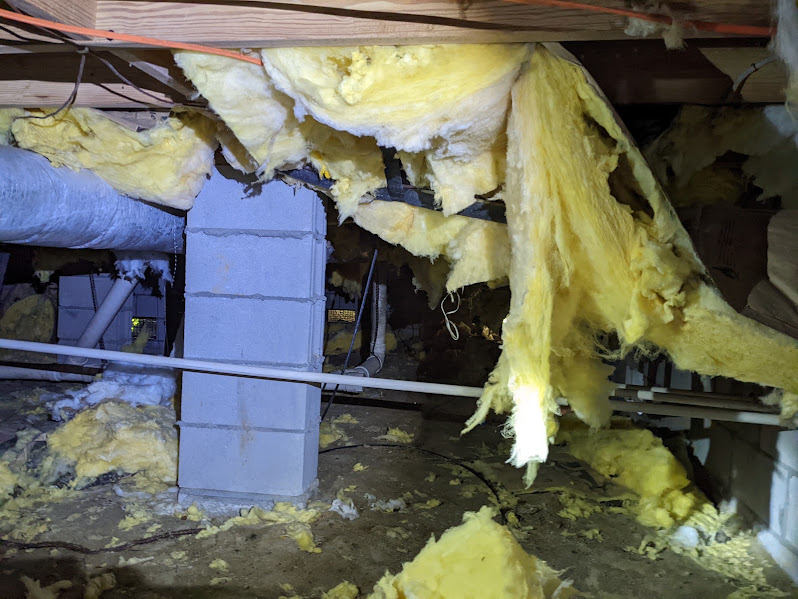
Fallen and moisture-damaged insulation removal
Wet, compressed, and hanging batts come out along with any support wire or mesh that has failed with them.
Contaminated insulation handling
Rodent-soiled and nesting-damaged material is bagged in place and carried out sealed, so it does not get spread through the crawlspace or the house.
Disposal
Everything we pull leaves with us the same day and is disposed of properly. Nothing gets stacked in your yard or reinstalled.
Subfloor assessment
With the insulation off, we read moisture in the subfloor and joists and photograph any staining, fungal growth, or soft wood we find.
Replacement options
We explain what makes sense for your crawlspace, including whether to insulate the floor at all or address the space itself first.
Photo documentation
Labeled photos before, during, and after, plus moisture readings, so you have a record of what was actually behind the insulation.
Why insulation fails under Lowcountry homes
Fiberglass batts were never designed for a vented crawlspace in a coastal climate. Charleston air holds moisture for most of the year, and the vents pull that humid air right across the underside of your floor. The fiberglass absorbs it, gains weight, pulls away from the joists, and ends up on the ground.
Once it is wet, it works against you twice. It loses most of its R-value, so your floors run cold in winter and your system works harder in summer. Worse, it presses damp material directly against the subfloor and traps it there, and damp wood is what wood-destroying fungi need to take hold.
That is why removal is often the first honest step rather than an add-on. Pulling the failed batts lets us read the wood accurately, see the real condition of the framing, and address the moisture source. Reinsulating a crawlspace that is still wet just buys the same failure again.
How the work runs
- 01
Free inspection
We assess the insulation, log moisture readings, and photograph the framing and ground conditions.
- 02
Written scope and flat price
You get photos and a plain scope covering what comes out, disposal, and any replacement you choose.
- 03
Removal and disposal
Batts are bagged in the crawlspace, hauled out, and taken off site the same day.
- 04
Assess, then replace
We review the exposed subfloor with you, address moisture first, and install new insulation once the space is dry.
What it costs
Removal pricing is based on square footage, how much material is down, contamination, and crawlspace access. Replacement is quoted separately so you can see both numbers and decide. We will not bundle replacement into a removal quote when the space is not ready for it.
Frequently Asked Questions
Related work
Crawlspace Cleanouts
Clear debris and fallen material so the space can be worked and read.
Vapor Barrier Installation
Cut off ground moisture before new insulation goes back up.
Not sure which of these your home needs? Compare every option on our Charleston crawlspace services page, or read how we handle CL-100 moisture corrections before a closing.
Find out what is behind your insulation.
Free crawlspace inspection across Charleston and the Lowcountry, with moisture readings and labeled photos you keep.